Cracked Teeth
Cracked teeth can cause a variety of symptoms, such as pain while chewing, sensitivity to hot or cold, or discomfort when releasing biting pressure. It is also common for pain to come and go, making it difficult to diagnose the cause of discomfort.
When you chew, the crack in the tooth may shift slightly, irritating the pulp inside. When biting pressure is released, the crack can close quickly, resulting in sharp pain. Over time, the pulp can become damaged, resulting in persistent pain—even when you’re not eating.
If left untreated, the crack can lead to infection of the pulp tissue. This infection can then spread to the bone and gum tissue surrounding the problematic tooth.
Types of Cracks
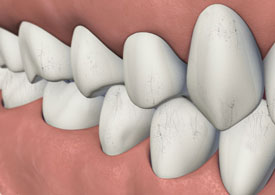
Craze lines
These are tiny cracks that only affect the outer enamel of the tooth. These cracks are more common in adults. These types of cracks are superficial and are usually of no concern.
 Fractured Cusp
 Fractured Cusp
When a cusp becomes weakened, a fracture may result. The cusp may break off or be removed by a dentist. A fractured cusp rarely damages the pulp, so root canal is not necessary. Your dentist will usually restore the tooth with a full crown.
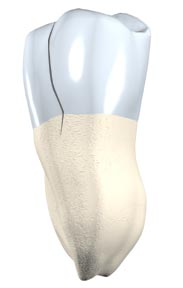 Cracked Tooth
 Cracked Tooth
This type of crack extends from the chewing surface of the tooth and vertically migrates towards the root. In some cases, the crack may extend below the gum line. It is possible for the crack to extend further into the root. Damage to the pulp is commonplace. In this case, root canal treatment is usually necessary. A cracked tooth that is not treated will worsen, resulting in the loss of the tooth. Therefore, early detection is essential.
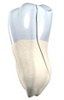 Split Tooth
 Split Tooth
A split tooth is usually the result of an untreated cracked tooth. It is characterized by a crack that divides the tooth into distinct segments. Unfortunately, a split tooth cannot be saved in its entirety. However, depending on the location and severity of the split, it may be possible to preserve part of the tooth. In some cases, endodontic retreatment by our doctors, combined with a restoration by your general dentist, can help save the remaining healthy portion.
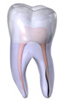 Vertical Root Fracture
 Vertical Root Fracture
A vertical root fracture begins at the root and extends towards the chewing surface of the tooth. Unfortunately, they show minimal symptoms and may go unnoticed. If a portion of the tooth can be saved by removing the fractured root, endodontic surgery may be an option. Otherwise the tooth will have to be extracted.